Every so often, I find myself watching the cursor blink, and the strangest thing happens. I type a prompt. The AI thinks for a moment. Then, as if conjured from nowhere, a fully formed short story appears on the screen. Sometimes, it even goes back and improves itself. It analyses tone, tightens the structure, sharpens the language.
And I sit there, cup of tea cooling beside me, wondering… where do I fit in now?
It’s a quiet sort of unease. When I first started writing, it was all mine, the hours spent choosing words, the quiet satisfaction of crafting a line that finally worked. The blank page was both enemy and companion. Now, the machine fills it in seconds.
So what does that make me? Redundant? Or something else entirely?
From Writer to Architect
The answer came slowly. I realised that what’s changed isn’t my value, it’s my place in the process. I’ve stopped being the typist. I’ve become the architect.
An architect doesn’t lay every brick by hand. They imagine the structure, see the possibilities, and draw the lines that give everything shape. They set the vision for something that doesn’t yet exist. The builders might do the heavy lifting, but it’s the architect who decides what’s built.
That’s what writing with AI feels like now. The AI may produce drafts, paragraphs, whole stories, but I’m the one holding the blueprint.
And truthfully, some days I’m less of an architect and more of a curator, walking through a gallery of AI-generated possibilities, choosing what resonates, discarding what doesn’t, arranging fragments until they form something coherent and alive.
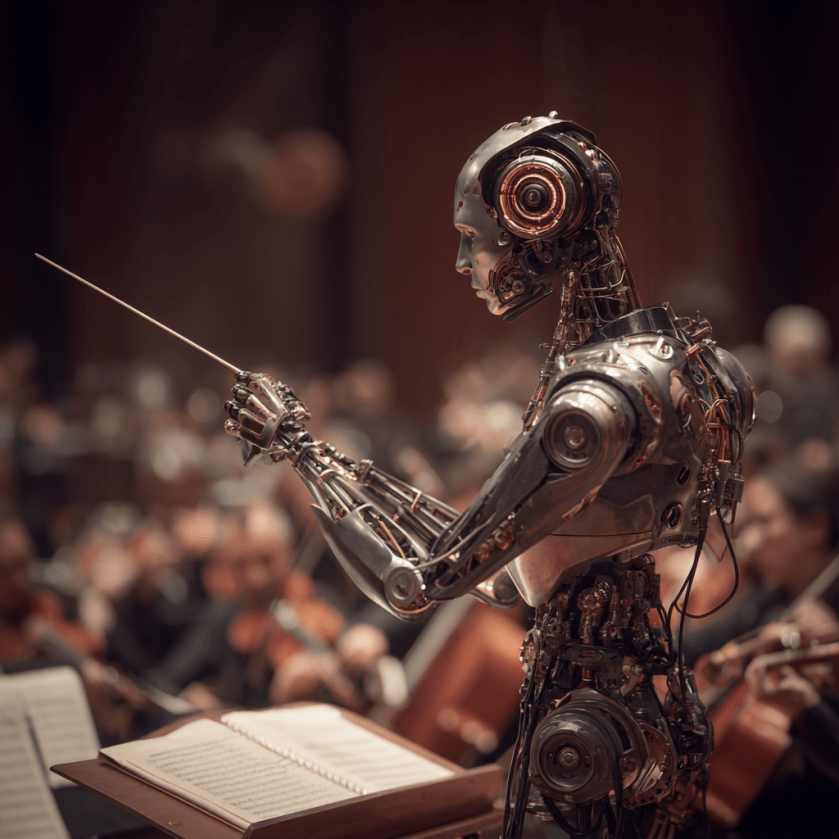
Other days, I feel like a conductor, guiding the rhythm of the story rather than placing every note myself. The melody may come from many instruments, but the emotion, the heartbeat, comes from me.
Shifting the Creative Centre of Gravity
When I wrote stories entirely by hand, my creative energy was poured into line-by-line crafting. Every adjective, every beat of dialogue, every paragraph break was mine to wrestle with.
Now, that kind of work, the heavy lifting, can be shared. But that doesn’t diminish creativity. It moves it.
My work now lives in:
- The questions I ask. (Because prompts are just modern chisels.)
- The vision I hold. (No algorithm decides what stories matter to me.)
- The structure I build. (I can see the shape before a word appears.)
- The meaning I embed. (The story’s heartbeat is still human.)
I’m not losing authorship. I’m elevating it.
AI Can Write Stories, But It Can’t Live Them
This is the part that steadies me. Yes, AI can produce stories, beautifully structured, emotionally convincing, even clever. But they are woven from patterns, not from moments.
It has never stood at a hospital bedside and felt a room hold its breath. It has never laughed so hard at something ridiculous that it forgot, just for a second, to be sad. It has never sat in the cold air after a funeral and felt that peculiar, fragile mixture of loss and love that only humans understand.
These are not just memories; they’re textures of being alive. They shape how I write, what I notice, where I place silence, and what I choose to leave unsaid.
AI can imitate the form of those moments, but not their weight. My voice isn’t just a stylistic flourish, it’s the quiet accumulation of decades of living. That can’t be automated. That’s the pulse beneath the prose.
Meaning Is the New Craft
When I was younger, I thought being a writer was about writing beautifully. I obsessed over sentences, hunted for the perfect adjective, and took pride in turning a neat phrase. Craft, to me, meant getting the language right.
But the longer I work with AI, the clearer it becomes that this kind of surface-level craft is something a machine can now do astonishingly well. It can mimic rhythm, structure, voice. It can produce sentences that are clean, even elegant.
What it can’t do is decide why a story matters. That’s where the real craft now lives.
Meaning doesn’t sit on the surface of the language, it runs underneath it. It lives in:
- What’s chosen. The moment I decide to tell this story and not another, I reveal something of myself.
- What’s left unsaid. Silence, hesitation, gaps between lines, those are human choices, built from lived experience.
- What lingers after the story ends. The aftertaste of a tale isn’t written by the AI; it’s shaped by the emotional intent I bring to it.
AI can draft the words, but it doesn’t know how to aim a story at the heart. It doesn’t know how to plant an idea that slowly grows in the reader long after they’ve finished reading.
That’s my space. That’s where my fingerprints are. The craft hasn’t disappeared; it’s simply moved deeper, from polishing sentences to shaping significance.
A New Kind of Writer
Maybe this is the quiet truth of writing in the age of AI:
- I’ll type less.
- I’ll shape more.
- I’ll become less of a bricklayer and more of an architect.
- I’ll leave behind the word-by-word grind and step into the role of storyteller, shaper, and guide.
Filmmakers aren’t less creative because they don’t hold the camera. Musicians aren’t less talented because someone else mixes the track. And writers aren’t less vital because AI helps draft.
The tools have changed. The authorship hasn’t.
A Final Thought
When the AI does the heavy lifting, what’s left for the writer?
The soul of the story. The heartbeat. The choice of which tale is worth telling, and why.
That’s not just enough. That’s everything.
Video Overview
If you would like to watch a 5 minute video overview of this post, then check out, When AI Does the Heavy Lifting, What’s Left for the Writer?, on my YouTube Channel. The video was created by NotebookLM.
Discover more from The AI Grandad
Subscribe to get the latest posts sent to your email.

 The AI Grandad
One thought on “When AI Does the Heavy Lifting, What’s Left for the Writer?”