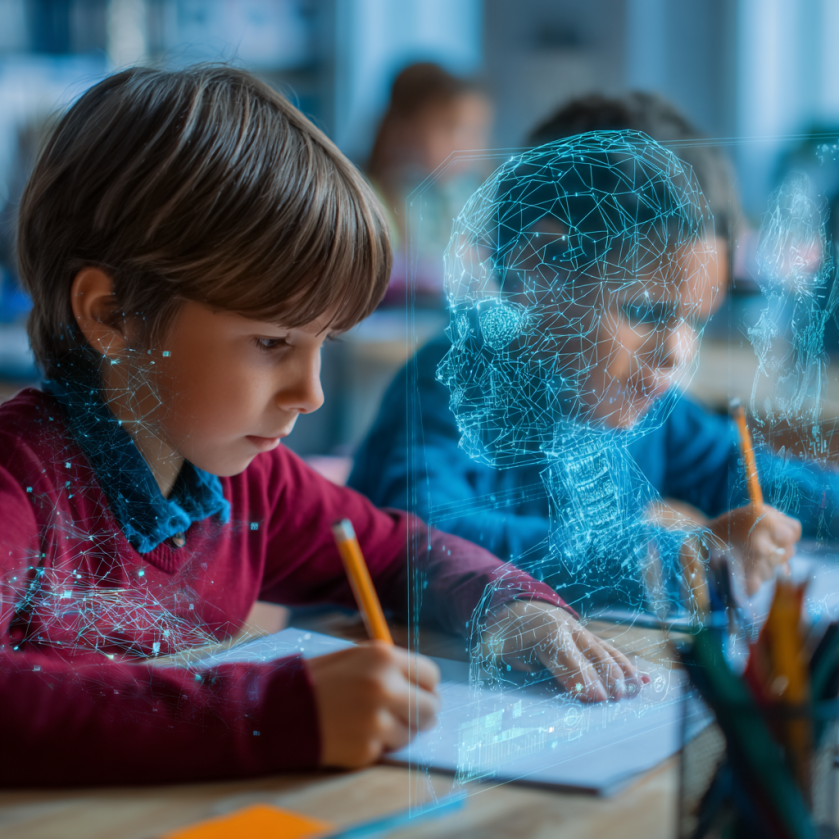
Google’s new report imagines AI as a personal tutor, teaching assistant, and global equaliser in education, but can it truly unlock human potential without losing the human heart of learning?
One of my favourite podcasts, that I listen to every week without fail, is called, ‘The Artificial Intelligence Show’. It was here that I first heard about this report, ‘AI and The Future of Learning’ published by Google, outlining what they see as the future of education and learning.
When I first read this report I couldn’t help but think back to my own teaching days. The idea that AI could support every learner individually, and even give teachers back their time to focus on what matters most, would have sounded like science fiction back then. Now, it’s becoming reality.
Google’s vision is ambitious: a world where AI supports teachers, personalises learning, and helps unlock human potential. It’s not about replacing people, it’s about re-imagining what people and technology can do together.
The Global Crisis in Learning
Before we talk about the promise, we need to face the problem. Education systems across the world are under immense strain, from underfunding to teacher shortages and the long shadow of pandemic learning loss.
The OECD’s 2022 PISA report called it an “unprecedented performance drop.” Maths scores fell by 15 points, reading by 10, compared to 2018. Behind those numbers are millions of students struggling to keep up in a world moving faster than ever.
As someone who’s spent decades in education, I can see how urgent this moment is. We’re not just teaching facts anymore, we’re preparing young people for jobs that don’t yet exist, often alongside AI itself.
AI’s Transformative Promise
AI could be the most significant educational shift since the invention of the internet. But unlike the internet, which gave us access to information, AI helps us understand and apply that information. Here’s what that might look like in classrooms around the world:
1. The Always-Available Tutor
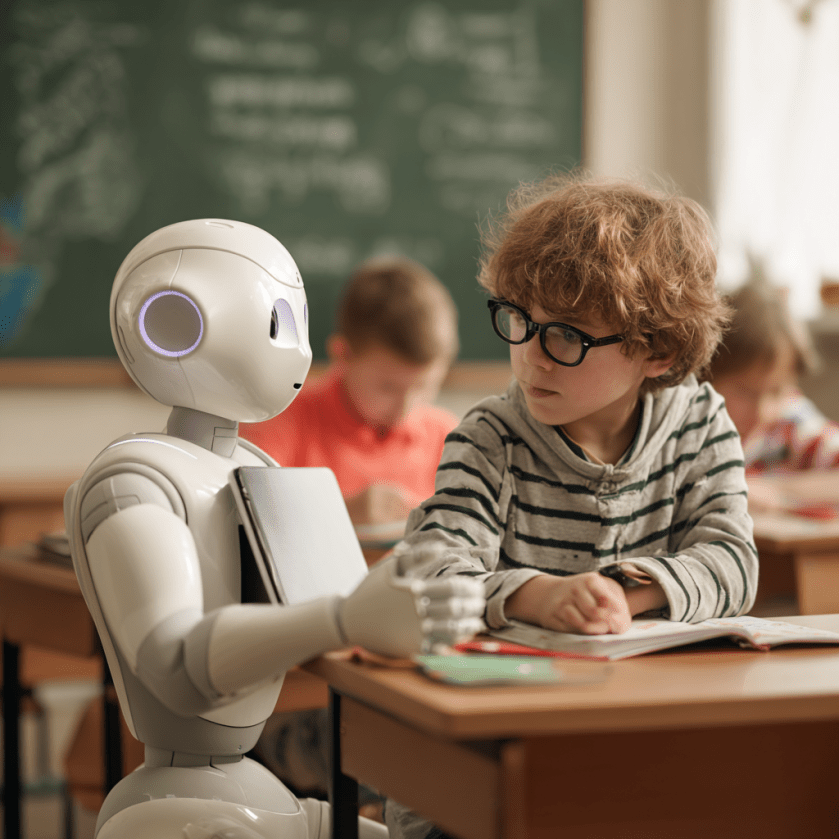
Research shows one-to-one tutoring has the biggest impact on achievement. AI tutors can’t replace human warmth, but they can fill the gaps, an always-awake, non-judgemental helper for learners who need extra time, confidence, or quiet repetition.
2. Finding the “Sweet Spot”
Every teacher knows the magic of the “just-right” challenge, where a child is stretched but not overwhelmed. AI can tailor lessons to each learner’s background, pace, and needs, keeping them in that productive zone. This could be transformative for neurodiverse students who are often underserved by one-size-fits-all classrooms.
3. The Tireless Teaching Assistant
Ask any teacher what they’d love more of, and the answer’s time. AI can help with research, lesson plans, marking, and admin, giving educators space to do what humans do best: connect, inspire, and nurture curiosity.
The Tough Questions
Of course, not all change is smooth. Google’s report is refreshingly honest about the risks:
- Accuracy and Trust: AI can get things wrong, sometimes confidently. The goal is not to make AI omniscient, but self-correcting and transparent.
- Metacognitive Laziness: We must teach students to think with AI, not let AI do the thinking for them. The best tools encourage reasoning, not shortcuts.
- Cheating and Assessment: If students can ask AI for answers, we need to rethink what “assessment” means, perhaps with more debates, portfolios, and in-person questioning.
- Equal Access: AI mustn’t widen the digital divide. It has to work for all languages, all communities, and all learners, not just the privileged few.
LearnLM and Gemini: Google’s Learning-Focused AI
Google’s education models, Gemini and LearnLM, are built specifically around learning science. They don’t just deliver facts; they aim to manage cognitive load, spark curiosity, and encourage reflection.
I’ve already experimented with Google’s NotebookLM, a tool that helps summarise and connect complex ideas, and it’s fascinating to see how that same approach could work for students and teachers.
This isn’t about automating education; it’s about augmenting it. Helping teachers teach better. Helping learners learn deeper.
My Reflections as a Former Headteacher
If AI had been available when I was running a school, I’d have used it to support the quiet learners who slipped through unnoticed, or the overworked teachers who never quite got a break.
AI won’t solve every problem, but it might help us ask better questions, and that, in education, is half the battle won.
Key Takeaway
AI in education shouldn’t replace teachers, it should reignite their purpose. The goal isn’t automation; it’s amplification. What do you think? How can we improve education for our children and grandchildren?
About The AI Grandad
Find out more about The AI Grandad on:
YouTube – The AI Grandad
X – The AI Grandad
Facebook – Mike Jackson – The AI Grandad
What do you think AI creativity tells us about ourselves?
Share your thoughts in the comments, I love hearing from curious minds!
Discover more from The AI Grandad
Subscribe to get the latest posts sent to your email.

 The AI Grandad