
A Humorous Confession to Start Us Off
There was a morning not too long ago when I typed what I believed was a cracking first line, something sharp, moody, and self-assured, and I leaned back with the satisfied air of a man who still knows how to swing a hammer. Then, with the casual bravado of someone who believes he’s in no danger whatsoever, I asked the AI to “have a go too.”
What appeared on my screen wasn’t just good. It was annoyingly, almost cheekily good. It had rhythm. It had a spark. It had that little shimmer of confidence you get from someone who turns up to the party already knowing they look great. I remember staring at it and thinking, “Alright then… show-off.”
And that, rather unexpectedly, was the moment I realised I could either pretend this hadn’t happened or just admit the truth: sometimes the AI writes better short stories than I do. And instead of spiralling into panic, a curious part of me, the same part that once got me into teaching, podcasting, writing, self-publishing, and YouTube, quietly leaned forward and said, “Now this is interesting.”
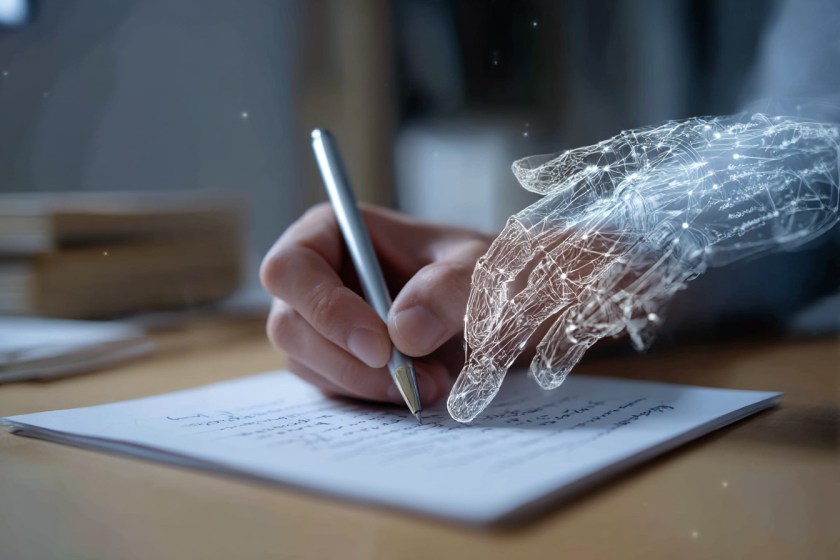
The Moment I Stopped Pretending Otherwise
For months, I tiptoed around the idea like someone avoiding the last shortbread biscuit on the plate, we all know we want it, but heaven forbid we commit. I’d heard all the comforting lines:
“AI has no feelings.”
“AI has no childhood memories.”
“AI can’t possibly understand grief.”
But then it struck me: readers don’t come to a story for the author’s biography. They come for the writing. They come for characters who feel alive, for the quiet nudge of a sentence that knows exactly where it wants to land, and for twists that feel earned rather than laboured.
And the AI, much to my annoyance, amusement, and eventual delight, was capable of delivering those things. Not always. Not predictably. But often enough to make me pause and realise I was watching something extraordinary unfold.
It doesn’t need my lived experiences to write well. It draws from patterns, from vast libraries of narrative rhythm, from emotional shapes repeated across centuries of storytelling. In its own peculiar, non-human way, it has learned how to do the job.
Once that sank in, curiosity beat ego in the boxing match inside my head.
The Resistance Phase (Also Known as Ego Wrestling)
For a little while, I clung to excuses for dear life. It was all quite dignified, in a chaotic sort of way.
“Oh, it only wrote that twist because I guided it.”
“Well, yes, the atmosphere is brilliant, but the idea was mine.”
“True, the character voice is gorgeous, but I set the tone.”
I was basically rearranging deckchairs while the ship sank, without me noticing.
Then came the quiet, unavoidable truth: the AI sometimes writes with a clarity and boldness I envy. It doesn’t hesitate. It doesn’t second-guess. It doesn’t rein itself in because it worries the story might be “too much” or “not enough.” It simply executes the idea with whatever tools it has, and it does so without blinking.
And I found that strangely comforting. Because if the machine can go that far, how far can I go with it?
The moment I dropped the mental tug-of-war, all the tension drained away. What remained was excitement, the kind that hums at the base of the spine when the future stops feeling like a threat and becomes more like an invitation.
Why This Doesn’t Scare Me (And Why It Shouldn’t Scare You)
Let’s lean all the way in: if AI writes something better than me, I don’t see that as a defeat. I see it as a doorway.
Once I stopped obsessing about who was “better,” an entirely new creative freedom opened up. Perfectionism loosened its grip. The pressure melted. My writing became more playful again, less like surgery and more like gardening: ideas popping up, growing, cross-pollinating, surprising me.
The AI doesn’t replace my creativity, it gives me new landscapes to explore. It’s a companion who whispers, “What about this?” every time I think the path has ended. It offers versions I wouldn’t have dared attempt, moods I wouldn’t instinctively choose, and structures I might never have invented.
And here’s the funny thing: the more I use it, the more human my own writing feels.
If anything is scary, it’s how many people might miss the chance to rediscover joy in their work because they’re too busy guarding the borders of an old identity. The creative world has grown bigger, not smaller. And there’s room in this expanded universe for everyone, especially those willing to experiment.

How I Now Work With AI (And Why It Still Feels Like Magic)
These days, my shed feels less like a writing room and more like a cheerful little laboratory where stories are brewed in beakers and unexpected ideas fizz up like lemonade. I test ridiculous prompts just to see what happens. I push characters into situations they probably don’t deserve. I ask the AI to rewrite scenes in the style of poets, comedians, misanthropes, dreamers, and unreliable narrators.
Half the time, I don’t know what I’m looking for until it appears.
Some experiments result in spectacular nonsense. Others reveal something sharper, funnier, darker, or more emotionally resonant than anything I would’ve produced on my own. Each one reminds me why I love this whole bizarre dance between human and machine: the discoveries feel genuinely collaborative, even when they appear in the places I least expect.
This sense of play, of curiosity without judgement, has been one of the greatest gifts AI has given me.
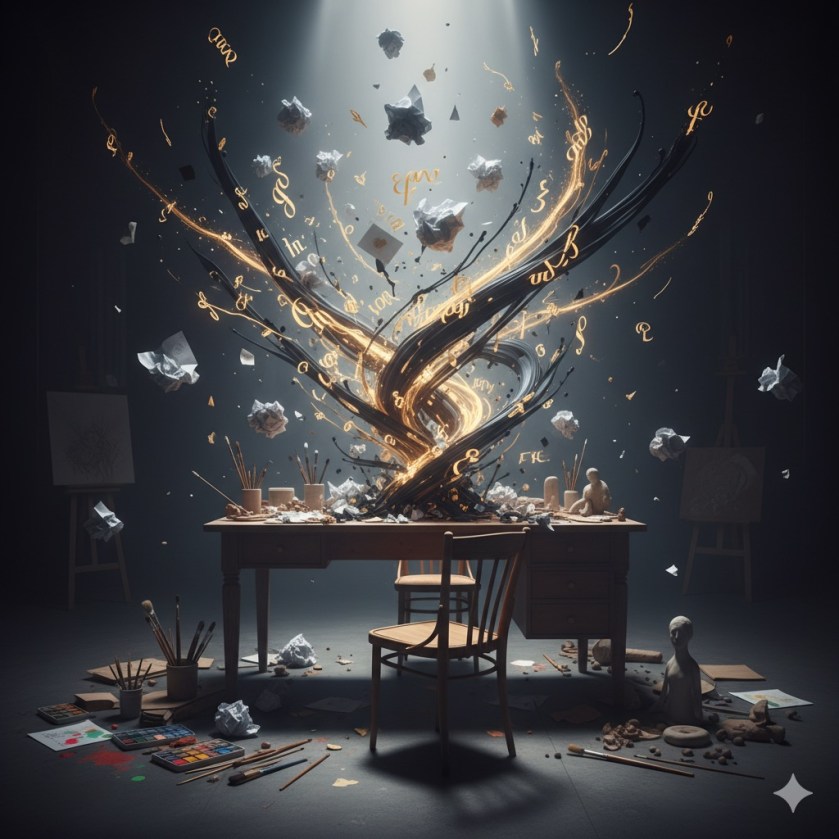
What This Means for The AI Grandad Blog
From here on, this blog becomes a place where exploration isn’t just welcomed, it’s the point. I want it to be a messy, joyful, occasionally controversial space where ideas spark, collide, and rearrange themselves in intriguing ways.
Here’s what you can expect moving forward:
• AI stories that astonish me (and hopefully you).
• Behind-the-scenes experiments, the good and the strange.
• Comparisons between drafts and the discoveries hiding in the edits.
• Conversations around myth, fear, creativity, and reinvention.
• A willingness to poke gently at entrenched positions, including my own.
• Encouragement for older readers who want to try something new but feel unsure where to start.
This won’t be a blog whispering apologies. It’ll be a place asking honest, sometimes slightly cheeky questions, and inviting you to join in the curiosity.
Closing Thought
So yes, sometimes (quite often, actually), AI writes better stories than me. It happens. And rather than threatening my identity, it’s opened doors I didn’t know existed. If anything, it’s made me more excited about what’s possible, not less.
If the machine is learning to dream in new shapes, imagine what we might discover by dreaming alongside it.
What excites you, or unsettles you, about this new era of storytelling?
I’d genuinely love to hear your thoughts.
About The AI Grandad
Find out more about The AI Grandad on:
YouTube – The AI Grandad
X – The AI Grandad
Facebook – Mike Jackson – The AI Grandad
What do you think AI creativity tells us about ourselves?
Share your thoughts in the comments, I love hearing from curious minds!
Discover more from The AI Grandad
Subscribe to get the latest posts sent to your email.

 The AI Grandad
3 thoughts on “Yes, I Think AI Can Write Better Stories Than Me. Here’s Why That Doesn’t Scare Me.”