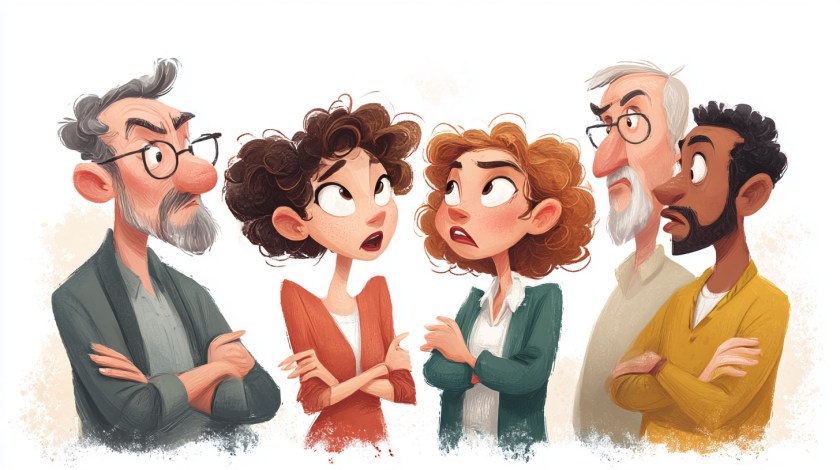
There is a moment every writer meets sooner or later, often accompanied by the same slightly embarrassed smile. Someone asks what you are working on, and you mention that you use AI in your writing. You expect curiosity or at least a raised eyebrow. Instead, you get a faint wince. A gentle pullback. A polite cough followed by a change of subject. You can almost hear the unspoken verdict forming in their mind. It feels a little like turning up to a book club with a sandwich when everyone else has brought a homemade quiche.
I know this moment well. I meet it more often than I expected, especially now that I am open about the way I use AI in my creative life. I do not hide the fact that many of my stories begin as experiments with prompts, or that my weekly drabbles often start life as a conversation between me and a machine. Most of the time people are fascinated, but every so often someone looks at me as though I have just confessed to plagiarising the local parish newsletter. They cannot imagine why anyone would want to write this way, and certainly cannot imagine being proud of it.
Writing with AI when your friends do not approve can feel strangely lonely at first. It is like joining a choir that half your mates insist is not real music. But once you get past that initial awkwardness, something quite freeing happens.
Understanding Why Resistance Appears
Creative tools have always caused a stir when they appear. They shift the balance between skill and opportunity, and they often rearrange the stories we tell ourselves about what creativity should look like. The earliest photographers were accused of cheating because they did not paint every detail by hand. Typewriters raised eyebrows because they removed the quirks of handwriting. Even spellcheck rattled a few cages.
This new wave of AI writing tools is no different. The resistance is not always about ethics or craft. In fact, the strongest reactions are usually emotional long before they become philosophical.
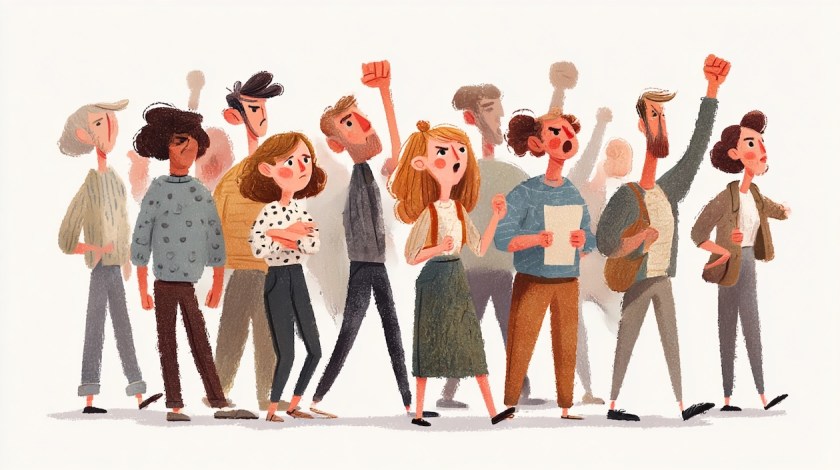
People worry about being replaced. They worry that the skills they worked so hard to develop might lose value. They worry that writing will become uniform or soulless. Beneath all that sits something simpler. They do not want to lose the version of themselves that feels tied to a manual craft.
I try not to judge that feeling. It is perfectly natural. Writing is tightly linked to identity. When a new tool disrupts that identity, even slightly, it can feel like being asked to move house without warning.
Why AI Feels Like a Door Opening Rather Than Closing
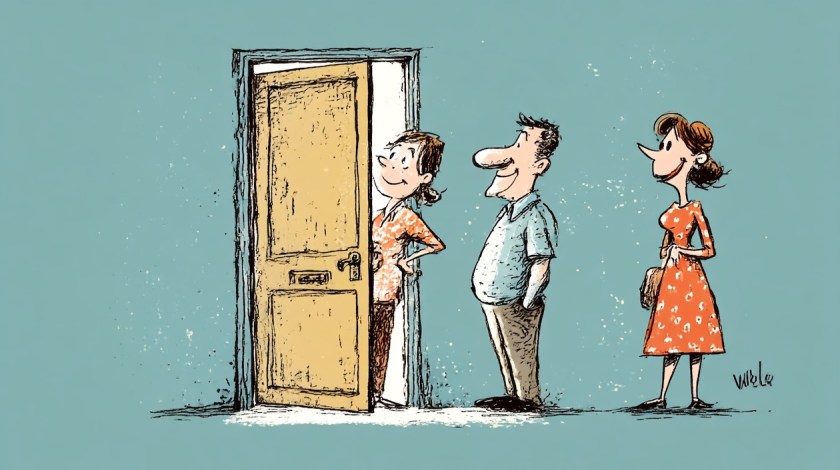
For many people, AI writing tools feel like the beginning of the end. That is not how it felt for me. It felt more like a beginning. A door opening. A return of playfulness.
Suddenly writing was not a solitary push through fog but a conversation. I could try an idea, reshape it, twist it, expand it, all within minutes. I could explore genres that had previously felt out of reach. I could challenge myself with strange prompts and unexpected forms. The speed at which ideas emerged made the whole experience feel lighter and more joyful. At seventy five, that sense of play is precious.
The people who worry about AI often assume it removes the writer from the process. They imagine a button that spits out a full novel while the writer sits in the garden sipping tea. Nothing could be further from the truth. AI provides possibility. It does not provide purpose. It provides material. It does not provide meaning.
The choices remain mine. The voice remains mine. The structure, rhythm and emotional direction remain mine. The machine is not replacing me. It is offering me new angles to explore.
Why Friends Struggle to Understand the Process
Many of the people who disapprove of AI writing have a fixed idea of what writing looks like. They picture the solitary struggle. The long afternoons spent wrangling sentences. The heroic battle with the blank page. They believe this is what makes writing authentic.
So when I describe my process, which involves conversations, explorations, variations and experiments, it sounds as if I have joined a different religion entirely. They cannot map my method onto their idea of what writing should be, so they assume something must have been lost.
Explaining only goes so far. I once tried showing friends the version of an AI draft and the version I ended up with after editing, shaping and polishing. They saw that I did far more work than they expected. Yet even then, a few still struggled to accept that the process could be legitimate, simply because it was different from theirs.
At some point I realised that I was not defending AI. I was defending my right to evolve. And that is a very different conversation.
When Your Work Challenges Their Assumptions
There is a story I often think about when this topic comes up. I once took four drabbles to my writing group. One was written years ago by me. Three had been drafted using AI and then shaped by me in the usual way. The group tried to guess which one was mine. They could not agree. They argued. They second guessed themselves. The moment they realised they could not tell, something shifted in the room.
Some found it exciting. Others found it deeply uncomfortable. The idea that a draft created with AI could stand beside a draft created entirely by hand troubled them. But what struck me was that their reactions had little to do with the stories themselves. The quality was not the issue. The process was.
Their discomfort was not really about me. It was about their belief that AI threatens the uniqueness of the human voice. What they had just experienced suggested the opposite. The stories that survived my editing and shaping still sounded like me. Not because the machine imitated me, but because my taste did the selecting. Taste is the true signature of a writer. And taste cannot be automated.
The Human Parts of Writing That AI Cannot Touch
When you work closely with AI, you start to see something important. The machine can generate variation, but it cannot choose what matters. It can offer options, but it cannot decide which one carries emotional truth. It can supply language, but it cannot determine meaning. Those decisions remain human. They always will.
This is the part many sceptics miss. AI does not erase the human role. It magnifies it. Because the faster you can explore possibilities, the more your instincts, judgement and voice are brought to the front. You end up spending more time making creative decisions and less time wrestling with inertia.
If anything, AI has made my writing feel more personal, not less. It reveals the patterns in how I think. It highlights the moments where my taste leans in a particular direction. It helps me experiment with shapes I would not have attempted alone. It has allowed me to write more freely and with more confidence. None of this diminishes the human part. It clarifies it.
Letting Go of the Need for Approval
One of the most liberating lessons in this journey has been discovering that I no longer need everyone to understand my process. Creative paths have always diverged. Some people cling to tradition because it comforts them. Others chase innovation because it excites them. Neither is right or wrong.
The difference now is that the tools we use can look startling to those who have not explored them. If you are the first in your circle to step into that new space, you can expect raised eyebrows. You can expect long pauses and a few wary comments. But you cannot let that pull you off your path.
If writing with AI fills you with energy, then that is the clearest sign you are doing something true to your creative self. Approval becomes secondary. You are not creating work for the committee. You are creating because the work calls you in.
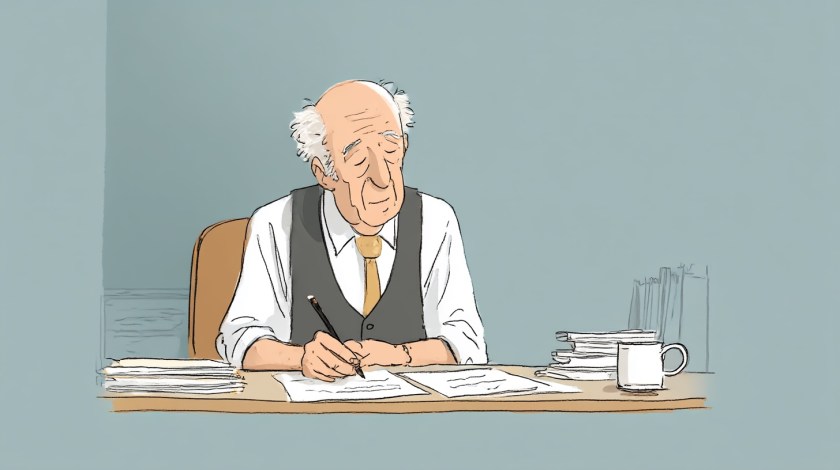
At my age, I have no intention of surrendering a tool that brings me joy simply to make others feel comfortable. Creative joy is too rare to sacrifice out of politeness.
A New Kind of Conversation With Creativity
Writing with AI has changed the way I think about creativity. It feels more conversational now. Less like a battle and more like a journey taken with a strange but interesting companion. It encourages exploration and invites curiosity. It allows me to generate more stories in a fortnight than I used to manage in a year, not through shortcuts, but through momentum.
The more I work with AI, the more convinced I become that this is not a threat to the writer. It is a widening of the writing life. It gives us new shapes to try. New methods to explore. New ways of unlocking ideas. And whether my friends approve or not, the shift is here. The door has opened. Those who choose to step through it will find an entirely new landscape waiting.
Call to Thought
So here is the question I keep returning to. If you set aside tradition and the need for approval, what creative path would you explore next, and what might you discover about yourself along the way?
About The AI Grandad
Find out more about The AI Grandad on:
YouTube – The AI Grandad
X – The AI Grandad
Facebook – Mike Jackson – The AI Grandad
What do you think AI creativity tells us about ourselves?
Share your thoughts in the comments, I love hearing from curious minds!
Discover more from The AI Grandad
Subscribe to get the latest posts sent to your email.

 The AI Grandad