Posted in AI and Creativity

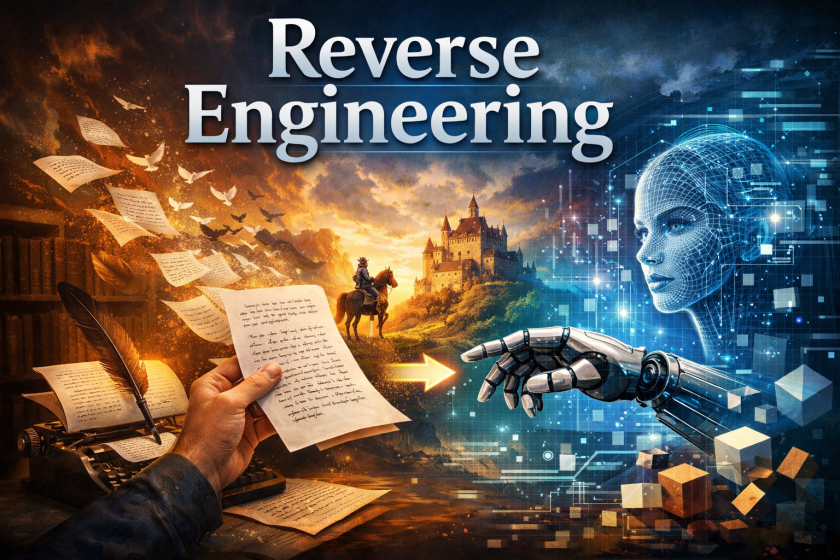
What Kind of Art Does Midjourney Make From a Single Quote?

If you are a regular visitor to this blog you will know that I love to experiment, play and have fun with all things AI. With that in mind I thought I would delve into my favourite AI image generator – Midjourney.

What Inspired Me?

I was recently staying at a hotel and the notepad in my room had inspirational quotes on the bottom of each page. I wondered what Midjourney would do if I simply put an inspirational quote in as the prompt? How would it interpret the quote?

Here’s what I got…

Continue reading “What Kind of Art Does Midjourney Make From a Single Quote?”
Posted in AI and Creativity

Why I Believe AI Will Replace Some Creative Jobs, And Why That Doesn’t Scare Me

The Question Everyone Tiptoes Around

Whenever the topic of AI and creativity comes up, someone inevitably leans forward and whispers, almost conspiratorially, “But surely it won’t replace real writers and narrators?”

I sip my tea, tilt my head, and say, “Well… it might.”

I don’t say this with doom in my voice. No shaking fists. No Shakespearean cries of “Woe, the end is nigh!” Just a gentle shrug and a kind of affectionate curiosity, the sort you might feel watching a magician pull a toaster from a top hat. You’re not horrified; you’re simply thinking, “Well, I wasn’t expecting that… do it again.”

Because after two years of building an AI-powered creative life in my little garden shed, surrounded by old books, knick knacks, notebooks, and a slightly judgmental spider, I’ve learned this:

AI probably will replace some creative jobs. But it won’t replace creativity, and it certainly won’t replace the peculiar, irreplaceable quirks of being human.

Instead of running from it, I’ve chosen to walk right up to the machine, give it a biscuit, and say, “Right then, let’s see what you can do.” (And what it can do is rather astonishing.)

Continue reading “Why I Believe AI Will Replace Some Creative Jobs, And Why That Doesn’t Scare Me”
Posted in AI and Creativity

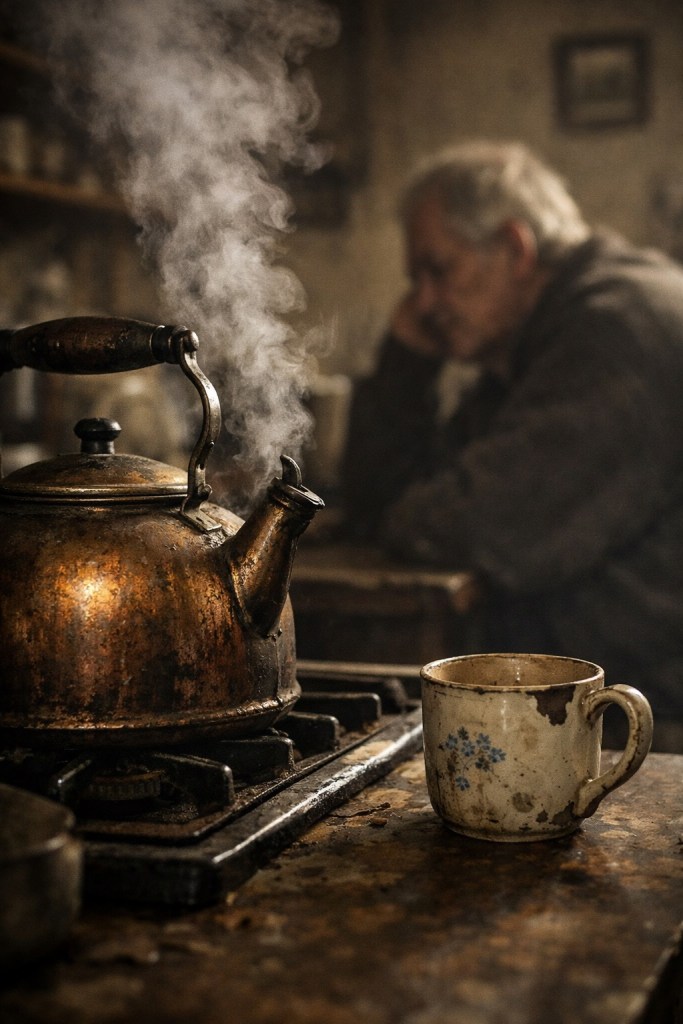
What If My Favourite Armchair Could Talk

Every now and again I am simply going to put up a story written by AI. The idea for this one came from the fact that we’ve just got rid of an old, though much loved, three-piece suite in favour of something more ‘modern’. (we didn’t dump ours! It went to a charity shop.)

As my favourite armchair was carried out of the front door I wondered what it might be thinking! The story, ‘Cast Off’, was created by Claude, and the prompt was:

“Write a 500 word monologue in the voice of an inanimate object, a battered old leather armchair. It has been dumped on a waste bit of ground. The voice is cynical with a touch of dark humour.”

Continue reading “What If My Favourite Armchair Could Talk”
Posted in AI and Creativity

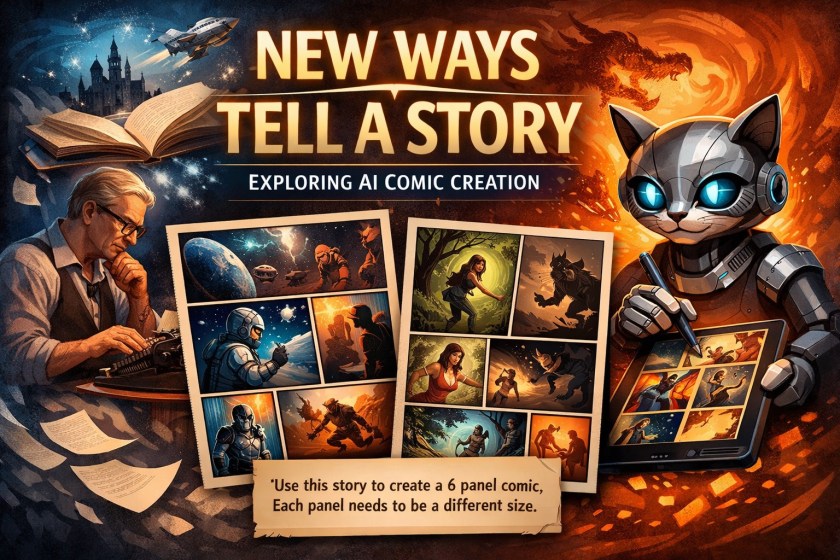
Yes, I Think AI Can Write Better Stories Than Me. Here’s Why That Doesn’t Scare Me.

A Humorous Confession to Start Us Off

There was a morning not too long ago when I typed what I believed was a cracking first line, something sharp, moody, and self-assured, and I leaned back with the satisfied air of a man who still knows how to swing a hammer. Then, with the casual bravado of someone who believes he’s in no danger whatsoever, I asked the AI to “have a go too.”

What appeared on my screen wasn’t just good. It was annoyingly, almost cheekily good. It had rhythm. It had a spark. It had that little shimmer of confidence you get from someone who turns up to the party already knowing they look great. I remember staring at it and thinking, “Alright then… show-off.”

And that, rather unexpectedly, was the moment I realised I could either pretend this hadn’t happened or just admit the truth: sometimes the AI writes better short stories than I do. And instead of spiralling into panic, a curious part of me, the same part that once got me into teaching, podcasting, writing, self-publishing, and YouTube, quietly leaned forward and said, “Now this is interesting.”

Continue reading “Yes, I Think AI Can Write Better Stories Than Me. Here’s Why That Doesn’t Scare Me.”
Posted in The AI Drabble Challenge

The AI Drabble Challenge – Week #5: Write In The Style Of…

Welcome back to the AI Drabble Challenge, a weekly experiment in human and AI creativity. Each Wednesday, I will set a prompt to inspire a Drabble, a story told in exactly 100 words.

You can use any AI model you like (ChatGPT, Claude, Gemini, or others), or several at once. How you collaborate is up to you. Maybe the AI drafts the first version, or writes the whole thing, maybe you co-write, or maybe you use it to spark ideas. What matters is the process, and sharing it.

This Week’s Prompt

This week’s Drabble Challenge comes with a twist: you’re not just writing a 100-word story, you’re channelling a famous author from the past.

From Dickens’ fog-filled London to Austen’s drawing rooms or Poe’s haunted minds, every writer left behind a distinct voice. The fun lies in slipping into their style for just 100 words, to see what happens when your imagination borrows someone else’s pen.

Here are ten voices to choose from:

  1. Charles Dickens – vivid streets, moral struggle, and human resilience.
  2. Edgar Allan Poe – obsession, decay, and the slow beat of guilt.
  3. Jane Austen – wit, irony, and unspoken emotion in polite society.
  4. H. G. Wells – science, wonder, and a cautionary eye on progress.
  5. Oscar Wilde – elegance, wit, and the tragic price of beauty.
  6. Virginia Woolf – inner lives told in ripples of thought and light.
  7. Ernest Hemingway – spare words, deep silence, and quiet despair.
  8. Agatha Christie – deception dressed as civility.
  9. Mary Shelley – creation, consequence, and the ache of being human.
  10. Lewis Carroll – logic turned inside-out, where nonsense makes sense.

In your prompt, ask the AI chatbot of your choice to write in the style of one or more of these famous authors.

Example Drabble

In the mixed style of Dickens, Wells, and Hemingway

The fog pressed close, thick as guilt, wrapping the narrow street in silence. From the corner shop came a faint ticking, steady as breath in a dying man’s throat. Samuel wiped the soot from his hands and listened, time itself seemed to hold its lungs. He’d sold the last of his hours to a gentleman with eyes too calm for London, a scientist or devil, perhaps both. Now the clocks refused to stop, their faces twitching like nervous skin. Samuel smiled, thin and weary. “Progress,” he muttered, as the gears behind his ribs began to turn. And turn. And turn.

How to Take Part

  1. Write your 100-word Drabble with help from an AI tool (or two).
  2. Post your story in the comments, or publish it on your own website and include a pingback to this post.
  3. If you can, share which AI model(s) you used and the prompt that started your process, we can all learn from each other.

Community & Highlights

Each week, I’ll read through the entries, share a few favourites, and highlight one that particularly stood out, for originality, style, or the inventive way it used AI.

This isn’t about competition; it’s about curiosity, experimentation, and celebrating how humans and machines can create together.

A Closing Thought

AI gives us the tools, but we give it meaning. Let’s see what stories emerge this week, 100 words at a time.


Now it’s over to you, can you craft your own 100-word Drabble inspired by this week’s prompt.

Post your story in the comments below or link to your own blog, I love seeing the imaginative twists readers come up with. So don’t be shy, join in and show us what your AI + Your Imagination can do!

New to the challenge? Visit The AI Drabbles Challenge Page for all the details and past prompts.