One of the things I love about creating these weekly stories is that the prompts often take me somewhere I never planned to go. This week’s experiment was all about pushing myself into stranger, more surreal territory. I wanted to nudge the story away from neat structure and towards something that felt slightly off-balance, as if the world itself had started arguing.
The starting point was simple enough: What happens if light and shadow stop cooperating? It sounds like the beginning of a physics lesson. Instead, it turned into a domestic haunting with a mischievous streak.
The seed of the idea came from watching how shadows behave in real life. They stretch, shrink, wander off when the sun decides to take a different route. But they never rebel. They never get ideas above their station. So I wondered: What if they did? What if shadows sulked like teenagers and light became a nervous wreck hiding behind the furniture? Once I’d seen that image, the rest of the story began to form.
I also wanted to explore that moment when a prompt stops being a prompt and becomes a proper narrative engine. “The Argument Between Light and Shadow” isn’t just a title or a funny thought experiment, it forces the story to misbehave. You can’t take that prompt and write something tidy. It demands a little absurdity. A little dread. A little “oh dear, this is going to go wrong, isn’t it?”
Prompts like this are a reminder of why I love these experiments. They’re odd. They’re playful. They keep me curious. And sometimes, if I’m lucky, they give me a story that glows a little differently… even if the light is hiding behind the sofa.
Here is the story…
The Argument Between Light and Shadow
The trouble began on a Tuesday, though it had probably been brewing for ages. I noticed it while making tea. The kitchen light flicked on, but instead of filling the room, it cowered behind the cupboard, shivering like a nervous cat. The shadows, freed from their usual discipline, sprawled wherever they pleased, a long, sulky smear under the toaster, a rude blob on the ceiling, a jagged sliver draped dramatically over the fridge.
I cleared my throat. “Everything all right in here?”
The shadows rustled irritably, as though I’d interrupted a meeting I had no right to attend. The light just quivered, refusing to emerge. By lunchtime the whole house felt… argumentative. The hallway light refused to illuminate the hall, preferring to shine sulkily at the skirting board. The shadows, delighted by the chaos, slipped under doors, curled around table legs, and stretched into places they’d never been invited. They sulked in clusters, muttering in corners like teenagers staging a protest.
I tried switching on a lamp in the living room. It blazed for one glorious second, then ducked sharply behind the sofa, bathing only the underside of a cushion in a triumphant glow.
“For goodness’ sake,” I snapped, “this isn’t sustainable.”
A chorus of shadows hissed back. The worst moment came around three o’clock when I attempted to read. Every time my eyes settled on a sentence, a shadow darted across the page, obscuring the words. When I moved the book, the light flickered away in a huff, as though offended by my neediness. I was trapped between a jealous light and sulking darkness, a referee in a cosmic divorce.
By four, I’d had enough. I marched into the centre of the lounge, hands on hips. “Listen,” I said, addressing the room like a headteacher breaking up a playground fight, “you two need each other. Light, you can’t exist without casting shadows. Shadows, you’re only interesting because of the light. So whatever this argument is, sort it.”
Silence. Then a single shaft of light crept timidly across the carpet, meeting a shy ripple of shadow halfway. They swirled, hesitating. Negotiating. For a moment I felt hopeful.
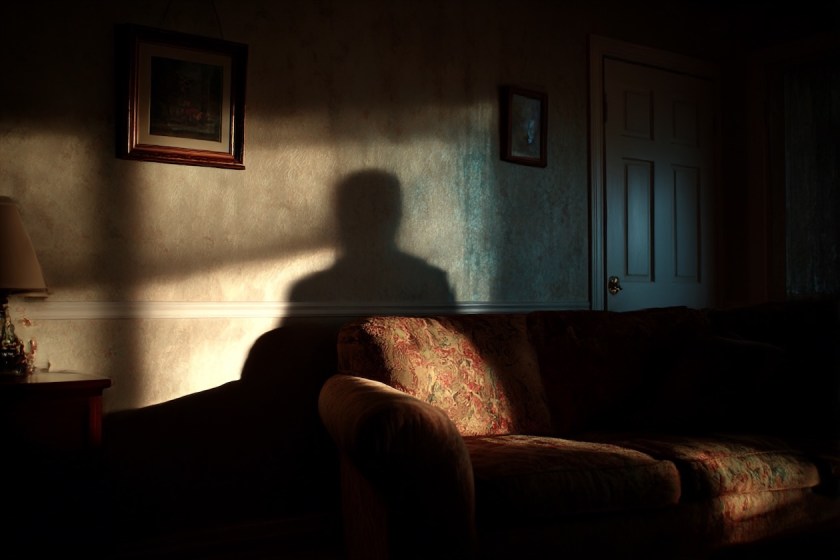
Then my shadow tore itself free from the wall, not a ripple this time, but a clean, deliberate separation. It formed into a full, upright figure, my shape in pure black. It tilted its head, as if deciding whether it liked what it saw. Before I could scream, it stepped forward and slid neatly into my body’s place, leaving me weightless and fading.
 The AI Grandad