Posted in AI and Creativity

Painting the Future: What AI Art Means for the Next Generation

When I was at school, (a long time ago!), “art” meant pencils, paint, and the faint smell of turpentine. We learned about perspective and shading, drew still-life bowls of fruit, and hoped the teacher wouldn’t notice when the apple looked more like a potato.

If you’d told me that one day people would create portraits, landscapes, and dreamlike scenes simply by typing a few words into a computer, I’d have laughed, or worried for humanity. Yet here we are.

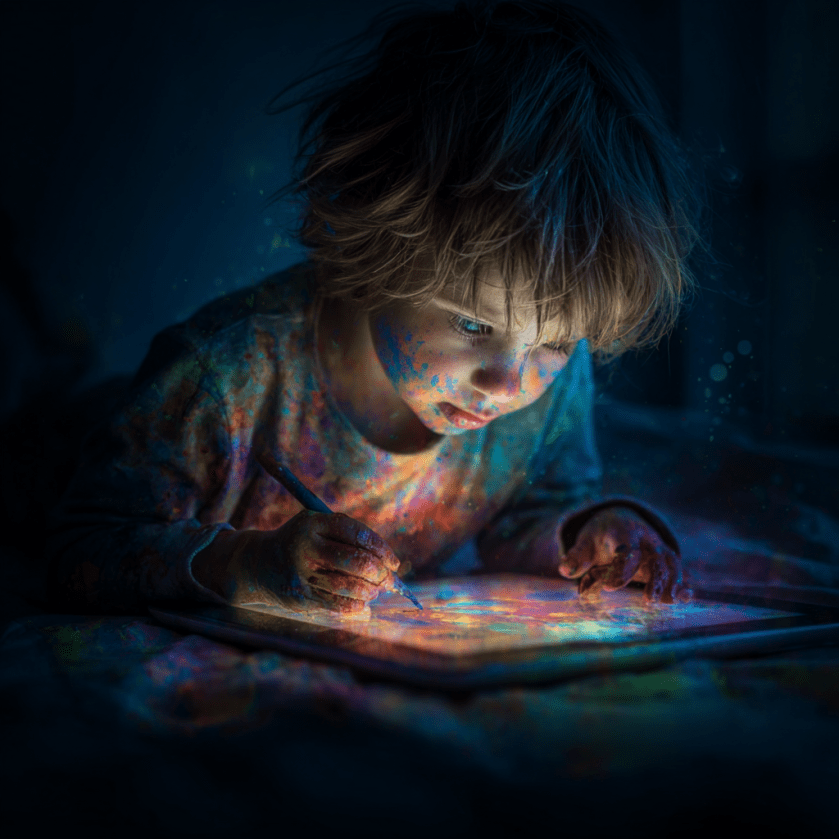
I’ve been experimenting with Midjourney, an AI tool that transforms text prompts into visual art. The results can be astonishing, eerie, funny, sometimes breathtaking. But what fascinates me most isn’t the images themselves. It’s the thought that my grandchildren will grow up seeing this kind of creativity not as extraordinary, but as ordinary. For them, it won’t be a revolution, it’ll just be Tuesday afternoon.

Continue reading “Painting the Future: What AI Art Means for the Next Generation”
Posted in The AI Drabble Challenge

The Umbrella’s Confession: When AI Gives Everyday Objects a Voice

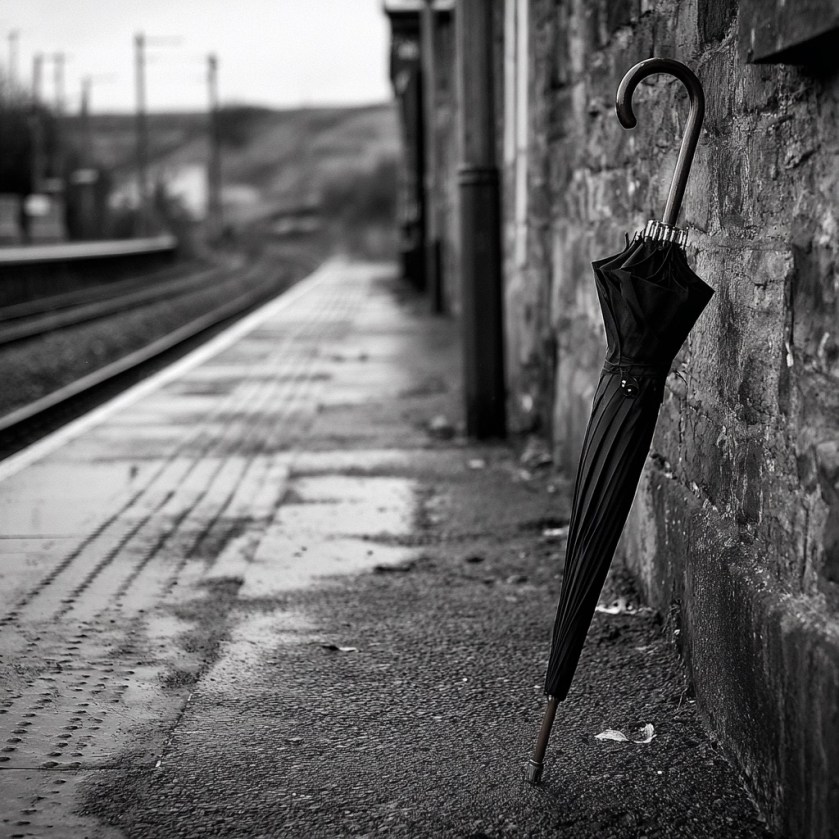
Sometimes, the fun of the weekly AI Drabble Challenge is seeing how far a single idea can go in 100-words. This week’s theme took an unexpected turn, an umbrella with a guilty conscience. Here’s what Claude came up with:

Continue reading “The Umbrella’s Confession: When AI Gives Everyday Objects a Voice”
Posted in Writing with AI

The Blorptickle Experiment: When AI Meets Nonsense

Every now and then, I like to give my AI a challenge that even I can’t predict the outcome of. This time, I asked ChatGPT to give me three completely made-up words. It obliged with BlorptickleSnindlewump, and Grathoon.

No meaning. No clues. Just three syllabic oddities plucked from the imagination.

I wanted to see what would happen if I asked the AI to connect them, to build a world around nonsense. Would it make sense of the senseless, or collapse into gibberish?

Here is the prompt I gave ChatGPT

Can you write a 200 word story where these three nonsense words – Blorptickle, Snindlewump and Grathoon are linked and serve as a prompt. Surprise me with your story.


Here’s what it came up with.


The Grathoon Accord

(A 200-word story written by AI)

The first Blorptickle arrived in my sink on a Tuesday, small, glowing, and humming the EastEnders theme through its pores. I assumed it was a hallucination. But by Wednesday, three more appeared, arguing about whose turn it was to exfoliate the Snindlewump.

The Snindlewump, for the record, lived in my bread bin. It spoke only in sighs, smelled faintly of lemon polish, and insisted it was my conscience. I disagreed. My conscience wouldn’t eat the toaster.

Then came the Grathoon, a towering, translucent being made of static and grammar corrections. It entered through the Wi-Fi and declared, in perfect BBC English, that my kitchen had been chosen as the site of the “Inter-Dimensional Treaty of Mild Inconveniences.”

By Thursday, negotiations were underway. The Blorptickles demanded equal fridge rights. The Snindlewump wanted peace, or possibly a sandwich. The Grathoon kept rewriting everyone’s statements for clarity.

On Friday, I woke to silence. Just crumbs, a faint lemon scent, and a note on the counter: “Treaty ratified. You were a surprisingly competent species.”

The kettle hasn’t worked since. But sometimes, if I listen closely, it hums the EastEnders theme, in perfect harmony.


Reflections from The AI Grandad

What fascinates me is how the AI took those three nonsense words and built a logic of its own. It didn’t just invent creatures, it created a miniature world with tone, rhythm, and even a sly British sense of humour.

To me, that’s the magic of experimenting with AI storytelling: the balance between absurdity and coherence. Give it chaos, and it will still try to make meaning.

And perhaps that’s a little like being human, constantly negotiating our own “Treaty of Mild Inconveniences.”

What Do You Think?

Could nonsense be a key to creativity, for humans and AI alike? I’d love to hear your thoughts in the comments.


About The Author

Mike is a retired headteacher, writer, and lifelong learner exploring how artificial intelligence is reshaping creativity, communication, and everyday life. Through The AI Grandad, he shares hands-on experiments, honest reflections, and a touch of humour about being 75 and still curious about the future.

When he’s not writing, Mike can usually be found testing new AI tools, reading crime fiction, or tucked away in a local coffee shop writing in his journal.


Posted in AI and Creativity

Does the Average Reader Care If a Story Is Written by AI?

I’ve been wondering about this lately. As someone who experiments with AI to write everything from short stories to blog posts, I often ask myself: does it really matter to the reader who wrote the words, me or the machine? I have a lot of writer friends who say that it does.

But the more I explore, the more personal it feels. I’ve watched people read my AI-written stories with genuine emotion, only for that expression to shift when I reveal the author wasn’t entirely human. It’s in that moment, between curiosity and unease, that I realise we’re in new storytelling territory.

Continue reading “Does the Average Reader Care If a Story Is Written by AI?”
Posted in AI and Creativity

The Last Cup: When AI Writes About Burnout Better Than We Do

Every now and again, I like to let AI take the pen, or in this case, the keyboard. The Last Cup is one of those experiments: a short story written entirely by AI with no edits from me. What fascinates me is how it captures something so human, exhaustion, ambition, and that quiet realisation that work might be drinking us dry. It made me wonder: when AI writes about burnout, is it simply echoing us, or holding up a mirror we’d rather not face?

Continue reading “The Last Cup: When AI Writes About Burnout Better Than We Do”