Thinking Out Loud

The Taste Question 

“Taste is supposed to be the thing humans bring. We know what we like. We know what feels true. Except… does taste survive when the machine is doing all the heavy lifting? Or does taste become something more like preference, which is a much smaller thing? I could prefer the version where the protagonist is angry over the version where she’s sad. But that’s not taste. That’s whim. Taste is built on knowledge, on pattern recognition across hundreds of books, on instinct honed through years of reading. If the machine has absorbed all that too, then what am I tasting with? My own limitations?”

Mike
Posted in AI Experiments

Weird Prompting

I am currently reading an interesting book called ‘How To Talk To AI (And How Not To) by Jamie Bartlett. In an early chapter about creativity he writes:

“The creative act might now include coming up with weird and wonderful prompts, frames and constraints which generate interesting ideas created between you and the machine.”

This got me thinking. I wondered what sort of ‘weird’ prompt Claude might give me for a 300 word grim, sinister dystopian story. It gave me this…

Continue reading “Weird Prompting”

Thinking Out Loud

The Vanishing Act 

“What if the machine is actually better at both writing and editing than I am? Not by accident, but genuinely. Better prose. Better structure. Better at catching what doesn’t work. I want to sit with that uncomfortable thought for a moment instead of rushing past it. If that’s true, then what am I doing here? I’m not the writer. I’m not the editor. So what role am I actually playing? Maybe the answer is that I’m becoming something we haven’t quite named yet. A curator of possibility, sure, but that feels too grand for what might actually be happening. Maybe I’m just the one who says yes or no. And maybe that’s enough.”

Mike

Posted in AI Experiments

Too Hot, Too Cold, Too Wrong

Introduction

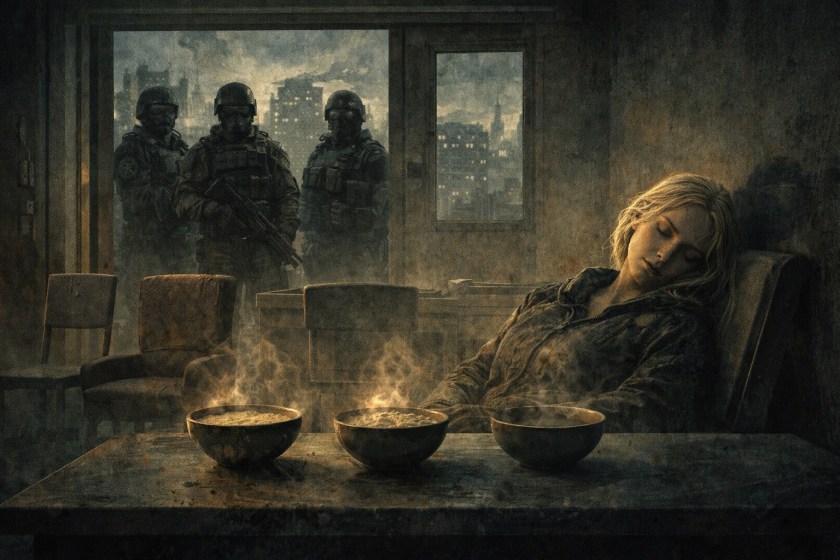
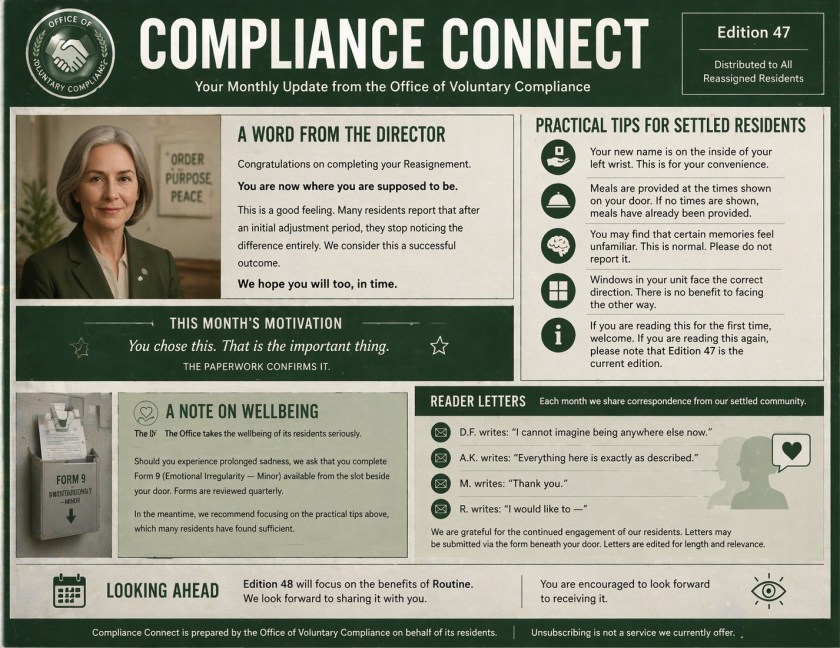
After chatting with Claude we decided it would be fun to take a traditional fairy tale and drop it into a dystopian scene. This is Claude’s thinking about why it chose Goldilocks.

Fairy tales are the oldest story machines we have. They run on deep logic, the rule of three, the outsider who stumbles into the wrong place, the test that reveals character. What happens when you drop that ancient structure into a dystopian future and ask AI to drive?

I chose Goldilocks. A girl who breaks into a house, samples what she finds, and falls asleep in someone else’s bed. In the original, it ends with a fright and a lesson. In this version, the bears are the state. And the porridge is compliance.

Continue reading “Too Hot, Too Cold, Too Wrong”

Thinking Out Loud

Curation as Creation

“Here’s what we don’t talk about enough: curation is a creative act. Every museum curator, every anthology editor, every person who says ‘this matters and that doesn’t’ is making a generative choice. When I work with an AI, I’m curating possibility. The machine offers, I select. I arrange. I decide what the reader sees and in what order and at what rhythm. That’s not passive consumption. That’s authorship of a different kind, and it’s legitimate. The editor’s eye, the editor’s judgment, the editor’s taste: these are not afterthoughts. They’re the thing itself.”

Mike