Posted in AI and Creativity

The Latest AI Image Generator From ChatGPT

I don’t know about you but whenever something new and exciting appears on the AI scene I simply have to play with it. Yet again I found myself disappearing down that rabbit hole I talked about in my ver first post on The AI Grandad.

This time it was all to do with AI generated images. Today, ChatGPT released its latest AI generator and it is truly amazing. So, I thought I would share some of my first, simple experiments with it.

The AI Grandad

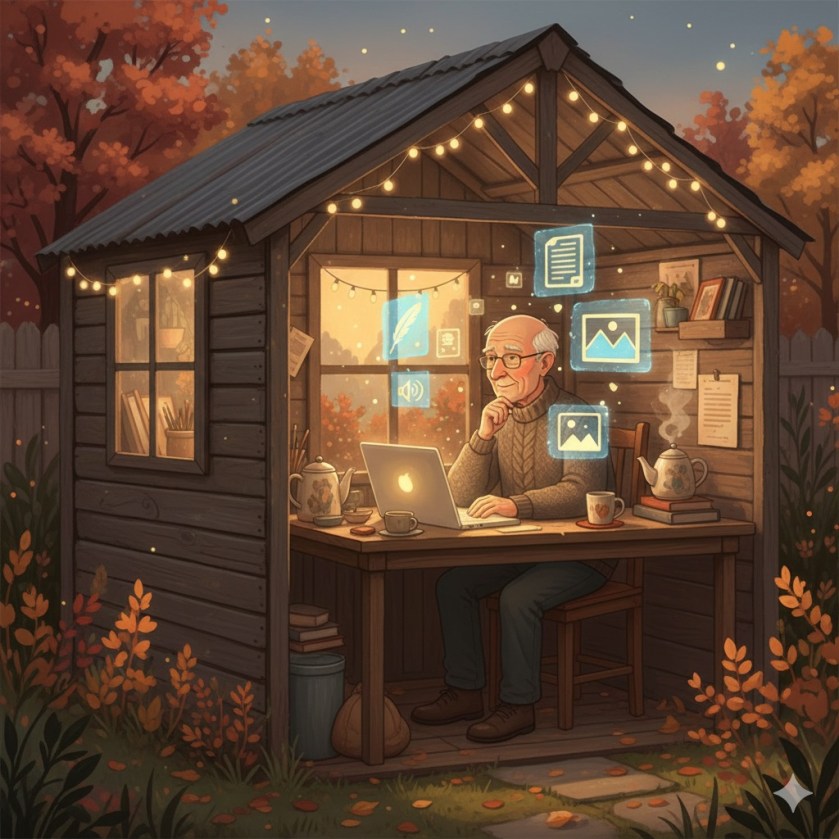
Because I chat with ChatGPT all the time it knows a lot about The AI Grandad blog and me. So, my first experiment was to prompt – ‘Create a doodle of The AI Grandad

Then I simply asked ChatGPT to ‘Turn it into a photo.’

Then the prompt was, ‘Turn the background into the interior of my shed with bookcases and a desk with a computer, have grandad sat at the desk.’

Notice how ChatGPT has kept the original design of The AI Grandad the same throughout. Impressive.

Playing With Text

AI image generators have always had a problem with text, or at least with text that made sense. For my next experiment the prompt was, ‘Put this short story on a single page of an open book, “Poetry is now a medical condition. Those who arrange words strangely are treated gently, sedated softly, corrected thoroughly. I keep a poem hidden in my mouth, repeating it silently so it doesn’t forget me first.” Include an appropriate sketch’

The short story was one I had recently posted on X.

I thought the sketch was great and I had said no more than ‘include an appropriate sketch’. GPT determined what this should look like.

I was intrigued as to just how ChatGPT would interpret messages, stories etc. My next experiment was to ask, ‘Create an image to go with this quote “Do one thing every day that scares you.” Include the quote at the bottom of the page. Portrait aspect.’

With the next prompt I was asking ChatGPT to do some research and create an image. ‘Create an image based on the poem Jabberwocky. Include the first verse.’

You can’t always rely on AI to be accurate. I checked the first verse of Jabberwocky and ChatGPT got it spot on.

Editing Images

This new AI image generator also does a great job of editing images. Either ones you upload or ones you create. I created this family photo taken in Times Square, New York.

Then I got ChatGPT to change the clothes and background for a Winter holiday.

…and the for an exciting holiday on a distant planet!

A Call To Thought

I’m off down my rabbit hole for more playful, creative experimenting. Why don’t you join me.


Posted in AI and Creativity

How an Unusual Prompt Changed the Story Completely

When people talk about AI writing, they often focus on what they ask it to do. Write a horror story. Write a cosy mystery. Write something in the style of a particular author. All perfectly reasonable requests.

But in my own experiments, I’ve found that the real shift happens when I stop giving AI sensible instructions and start giving it slightly awkward ones instead. Not genre. Not tone. A rule. A constraint that feels just a little unnatural. That’s when the writing stops drifting and starts making decisions.

This post is about one of those experiments.

Continue reading “How an Unusual Prompt Changed the Story Completely”
Posted in AI and Creativity

When Light and Shadow Stop Playing Nicely: My Latest Prompt Experiment

One of the things I love about creating these weekly stories is that the prompts often take me somewhere I never planned to go. This week’s experiment was all about pushing myself into stranger, more surreal territory. I wanted to nudge the story away from neat structure and towards something that felt slightly off-balance, as if the world itself had started arguing.

The starting point was simple enough: What happens if light and shadow stop cooperating? It sounds like the beginning of a physics lesson. Instead, it turned into a domestic haunting with a mischievous streak.

The seed of the idea came from watching how shadows behave in real life. They stretch, shrink, wander off when the sun decides to take a different route. But they never rebel. They never get ideas above their station. So I wondered: What if they did? What if shadows sulked like teenagers and light became a nervous wreck hiding behind the furniture? Once I’d seen that image, the rest of the story began to form.

I also wanted to explore that moment when a prompt stops being a prompt and becomes a proper narrative engine. “The Argument Between Light and Shadow” isn’t just a title or a funny thought experiment, it forces the story to misbehave. You can’t take that prompt and write something tidy. It demands a little absurdity. A little dread. A little “oh dear, this is going to go wrong, isn’t it?”

Prompts like this are a reminder of why I love these experiments. They’re odd. They’re playful. They keep me curious. And sometimes, if I’m lucky, they give me a story that glows a little differently… even if the light is hiding behind the sofa.

Here is the story…


The Argument Between Light and Shadow

The trouble began on a Tuesday, though it had probably been brewing for ages. I noticed it while making tea. The kitchen light flicked on, but instead of filling the room, it cowered behind the cupboard, shivering like a nervous cat. The shadows, freed from their usual discipline, sprawled wherever they pleased, a long, sulky smear under the toaster, a rude blob on the ceiling, a jagged sliver draped dramatically over the fridge.

I cleared my throat. “Everything all right in here?”

The shadows rustled irritably, as though I’d interrupted a meeting I had no right to attend. The light just quivered, refusing to emerge. By lunchtime the whole house felt… argumentative. The hallway light refused to illuminate the hall, preferring to shine sulkily at the skirting board. The shadows, delighted by the chaos, slipped under doors, curled around table legs, and stretched into places they’d never been invited. They sulked in clusters, muttering in corners like teenagers staging a protest.

I tried switching on a lamp in the living room. It blazed for one glorious second, then ducked sharply behind the sofa, bathing only the underside of a cushion in a triumphant glow.

“For goodness’ sake,” I snapped, “this isn’t sustainable.”

A chorus of shadows hissed back. The worst moment came around three o’clock when I attempted to read. Every time my eyes settled on a sentence, a shadow darted across the page, obscuring the words. When I moved the book, the light flickered away in a huff, as though offended by my neediness. I was trapped between a jealous light and sulking darkness, a referee in a cosmic divorce.

By four, I’d had enough. I marched into the centre of the lounge, hands on hips. “Listen,” I said, addressing the room like a headteacher breaking up a playground fight, “you two need each other. Light, you can’t exist without casting shadows. Shadows, you’re only interesting because of the light. So whatever this argument is, sort it.”

Silence. Then a single shaft of light crept timidly across the carpet, meeting a shy ripple of shadow halfway. They swirled, hesitating. Negotiating. For a moment I felt hopeful.

Then my shadow tore itself free from the wall, not a ripple this time, but a clean, deliberate separation. It formed into a full, upright figure, my shape in pure black. It tilted its head, as if deciding whether it liked what it saw. Before I could scream, it stepped forward and slid neatly into my body’s place, leaving me weightless and fading.


Posted in AI and Creativity

The Drabble Experiment: When My Writers’ Group Couldn’t Tell Who Wrote What

Last week I toddled off to my writers’ group with a small bundle of Drabbles tucked in my bag, four tiny stories, each exactly 100 words. One of them I wrote seven or eight years ago. The other three? Written that morning by AI, using my original Drabble as an example.

I didn’t tell them which was which. I just read them out and waited to see if anyone could recognise the story written by me. They couldn’t. Not a single one of them. And yet… most of them still don’t believe AI can “really write”. Which, frankly, made the whole thing even more delicious.

Continue reading “The Drabble Experiment: When My Writers’ Group Couldn’t Tell Who Wrote What”
Posted in AI and Creativity

The Prompt Experiment: What If Photographs Revealed Your Fears?

Every so often I like to give AI a prompt that gently nudges reality out of line and lets the story tip into something stranger. Not big flashy “save the universe” stuff, just a quiet twist that makes the world wobble and forces the characters to confront something true.

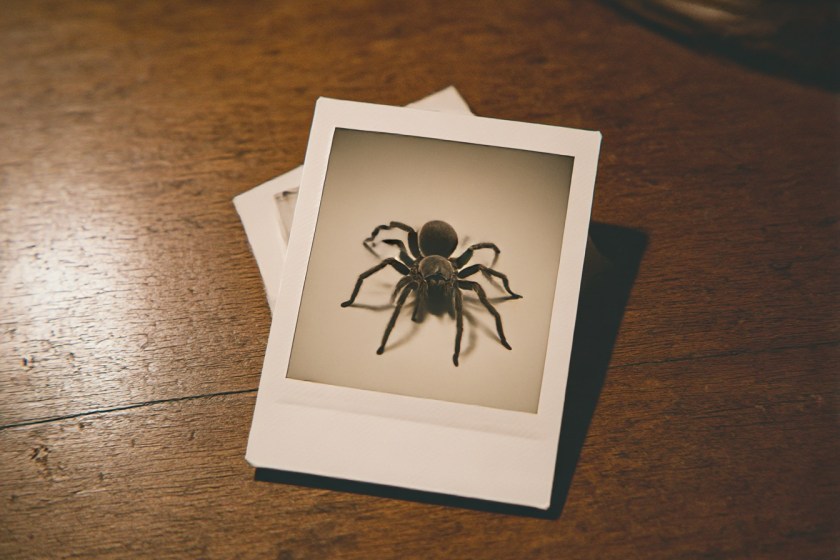
Today’s experiment is a favourite of mine. The premise of the prompt is: ‘In this world, photographs don’t show what people look like. They show what they fear most.

So, I put this prompt into ChatGPT, Claude and Grok – “Write a 400 word sinister, dystopian story where in this world, photographs don’t show what people look like. They show what they fear most.”

I got three very different stories. My favourite came from ChatGPT.

Continue reading “The Prompt Experiment: What If Photographs Revealed Your Fears?”